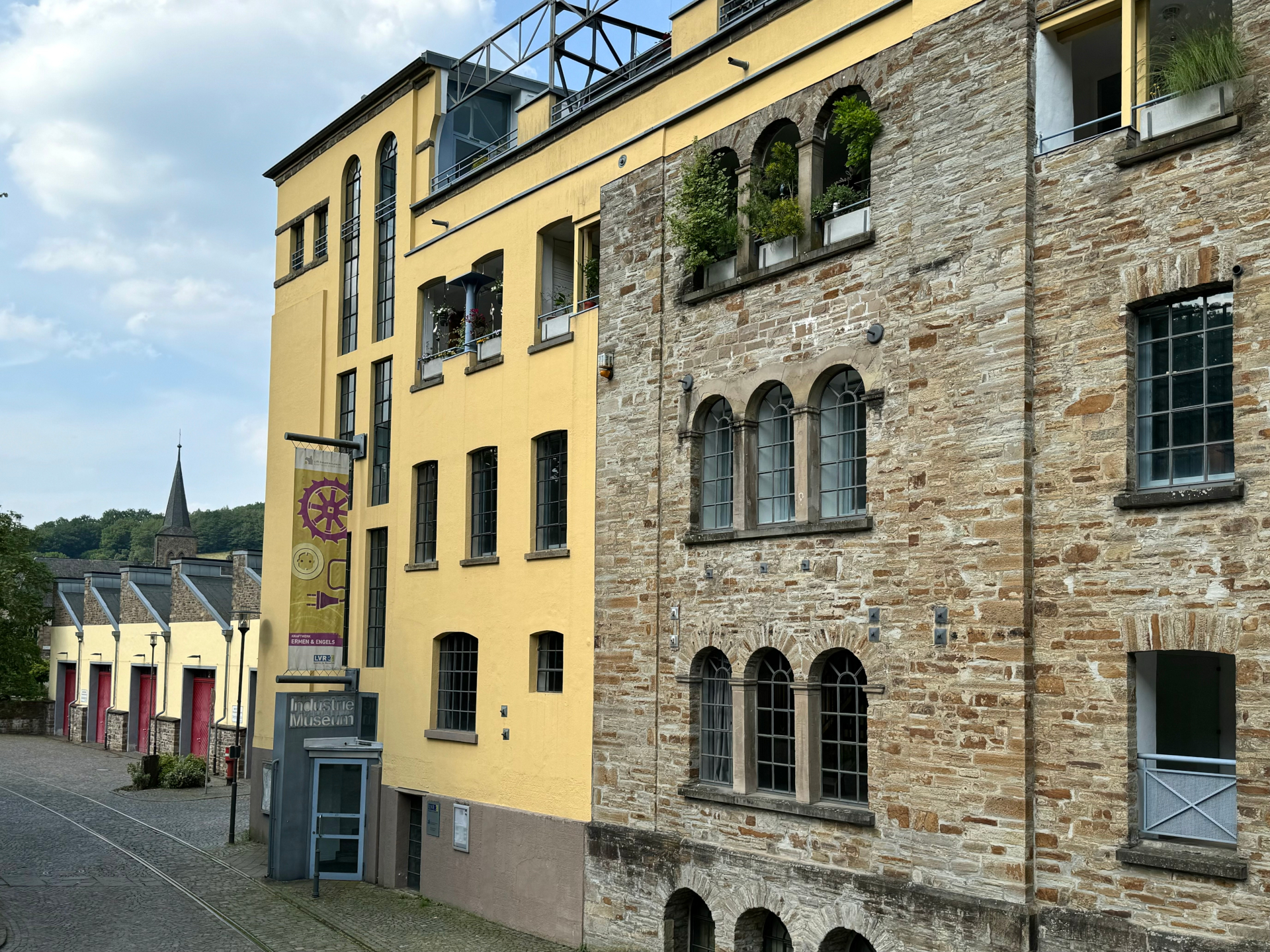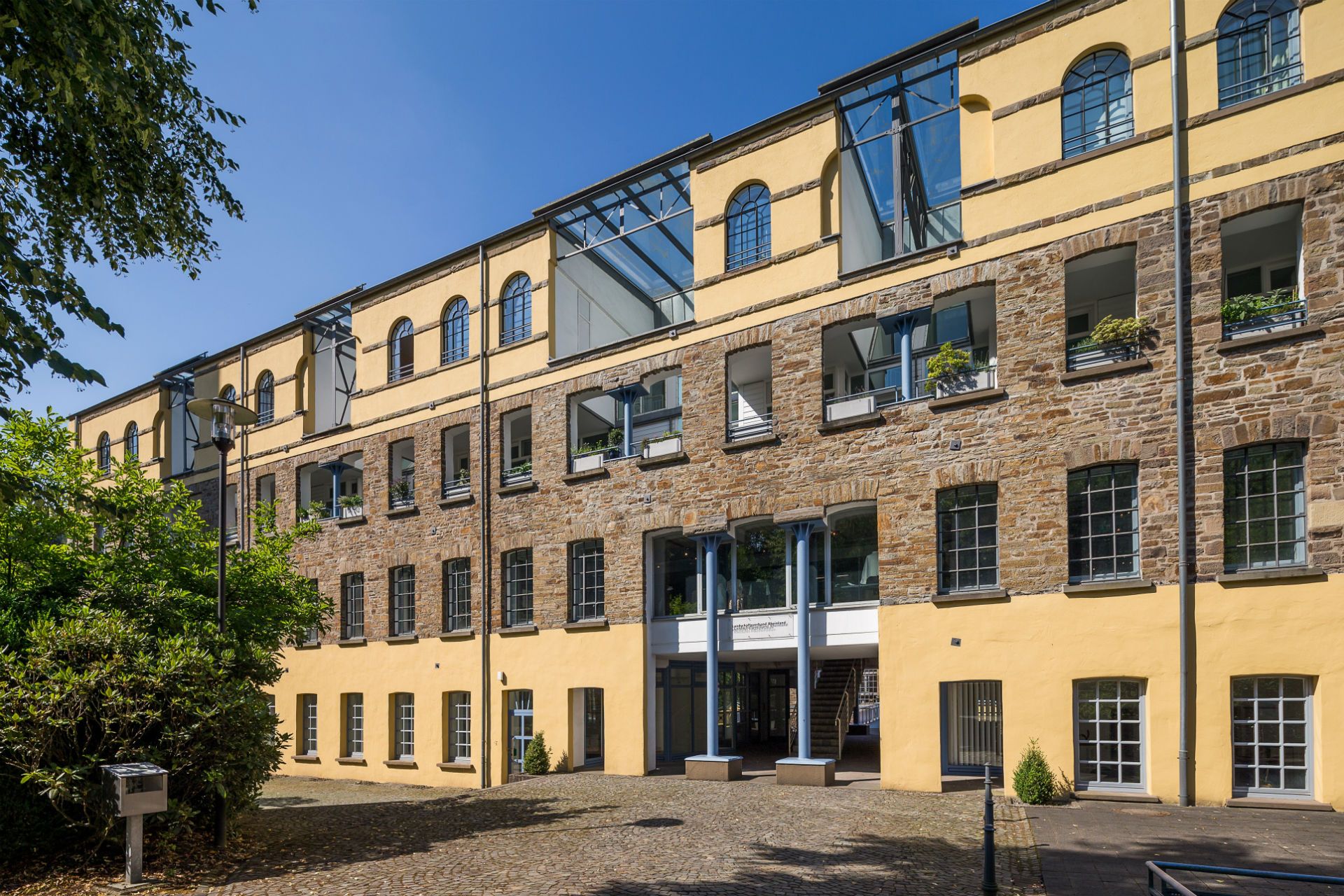
Around 1900, a power plant was established in the former Ermen & Engels cotton mill to supply the town of Engelskirchen with electricity. Over the decades, the building’s function changed, and the production facility was transformed into a museum. A guided tour still vividly conveys to visitors today what it was like back when the power of the Agger River was converted into electricity.
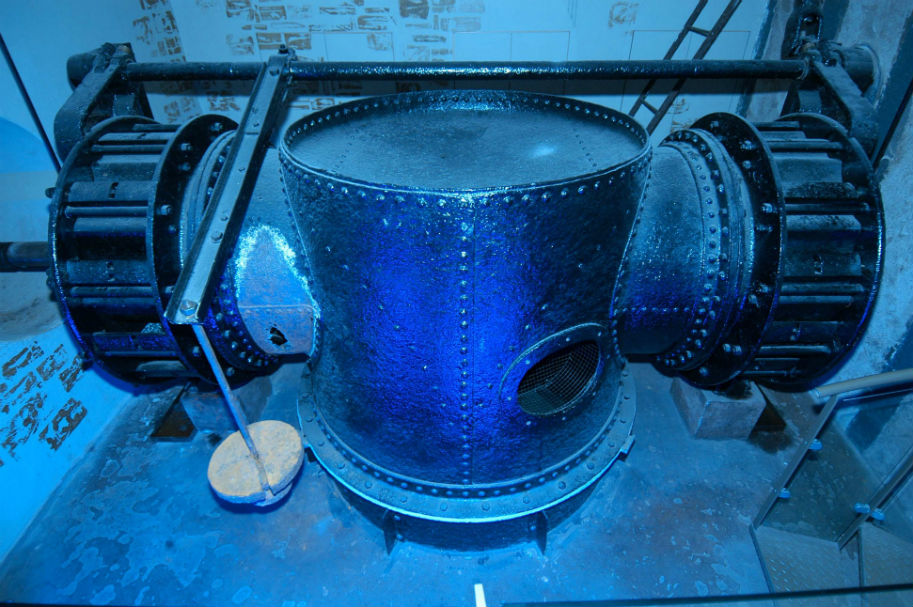
A mysterious blue light and the sounds of flowing water greet visitors as they descend into the turbine cellar. They create the impression that water still flows through the corridors with their massive walls. Once your eyes have adjusted to the darkness, the turbines become visible—the ones that drove the machines in the factory via a complex transmission system.
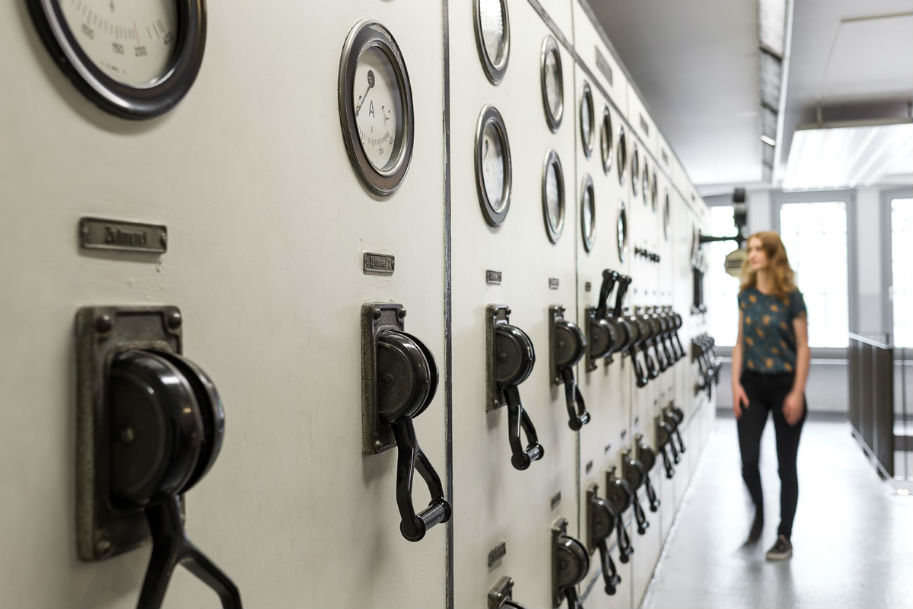
On the floors above the turbine cellar, the large control panel shows how electricity was distributed throughout the factory. As early as 1903, the factory owner’s residence and the town of Engelskirchen were already benefiting from local electricity generation. Thanks to the power plant in the factory, the electric streetlights here usually burned reliably.
The Power of the Steam Engine
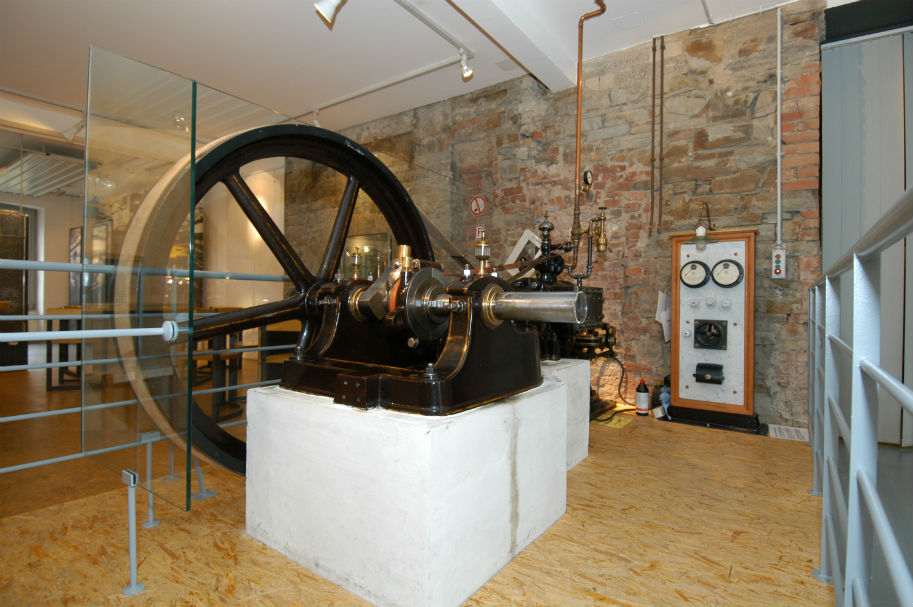
However, there were other times as well: The impressive steam engine at the entrance to the museum floor serves as a reminder that there was not always enough hydropower available to drive the machines. Steam power was therefore used as a supplementary energy source from early on—a step that visitors can still experience today.
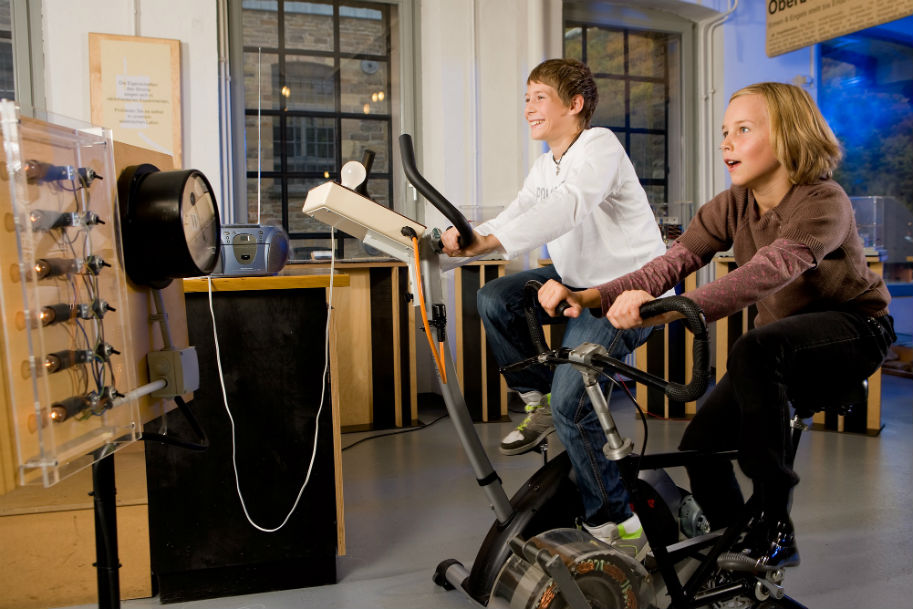
Speaking of visitors, special exhibitions offer them the opportunity to learn more about industrial history or take on technical challenges. In addition, students can experiment year-round at the six stations in the electricity workshop and discuss electricity generation, the importance of electricity, and its environmental impacts with their teachers.