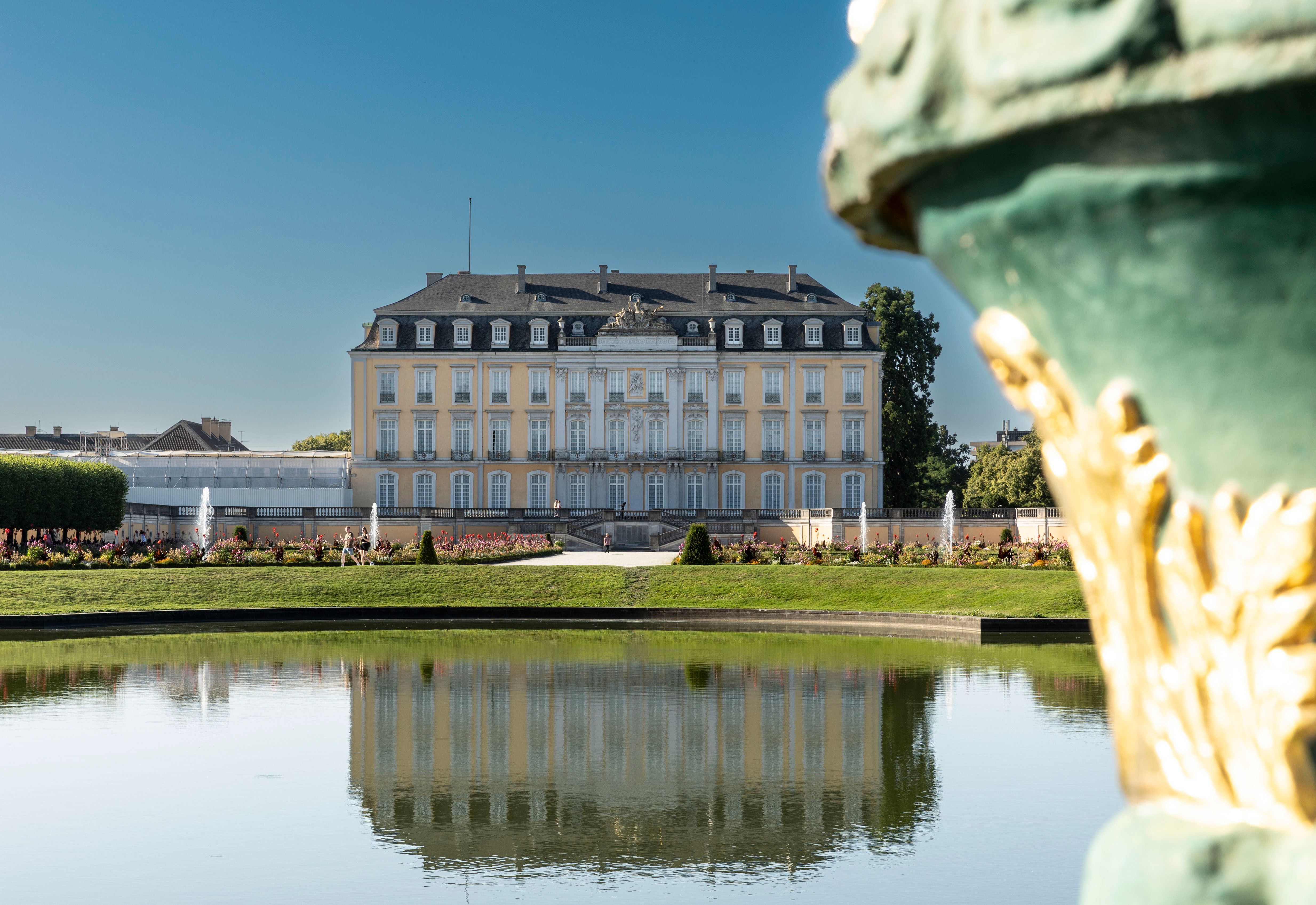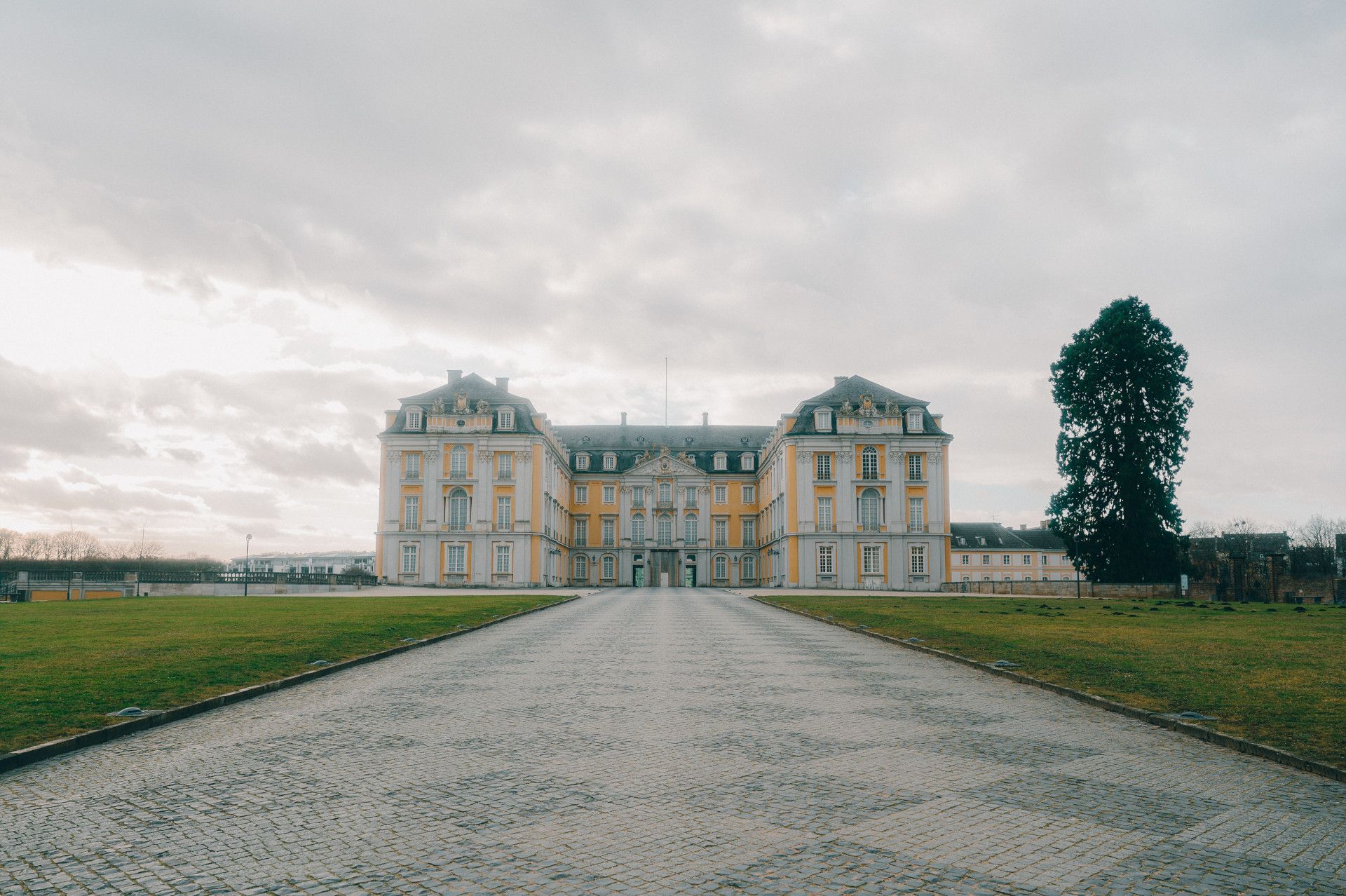
The splendor of the UNESCO World Heritage Sites of Augustusburg Palace and Falkenlust Palace in Brühl - Brühl Palaces for short - takes visitors' breath away. Anyone standing in the magnificent staircase of Augustusburg Palace will understand why other royal courts once looked enviously towards Brühl. The residence in the Rhine-Erft district near Cologne goes back to the Cologne Elector and Archbishop Clemens August of Bavaria. Today it is owned by the state of North Rhine-Westphalia.
UNESCO World Heritage Site
The palaces of Brühl and were added to the list of UNESCO World Heritage Sites back in 1984. This makes them one of the most important cultural creations of mankind. The site is considered to be the first significant Rococo creation in Germany and an outstanding example of a great 18th century princely residence.
With the first rocaille in Germany, a typical shell-shaped ornamentation of the period, Augustusburg Castle marks the birth of German rococo. What's more, the diversity and unmistakable expression of an entire era can be seen here. Falkenlust Palace, a 30-minute walk away, is the last surviving palace of its kind. Its park is a monument to garden art of international standing.
Augustusburg Palace
In 1725, Clemens August commissioned the Westphalian master builder Johann Conrad Schlaun to build a summer residence on the ruins of a medieval castle: Augustusburg Castle, named after him. From 1728, the Walloon architect François de Cuvilliés the Elder designed the castle in the basic form that can be seen today. Completed in 1768, Clemens August never saw the completion of his favorite palace as he died unexpectedly in 1761.
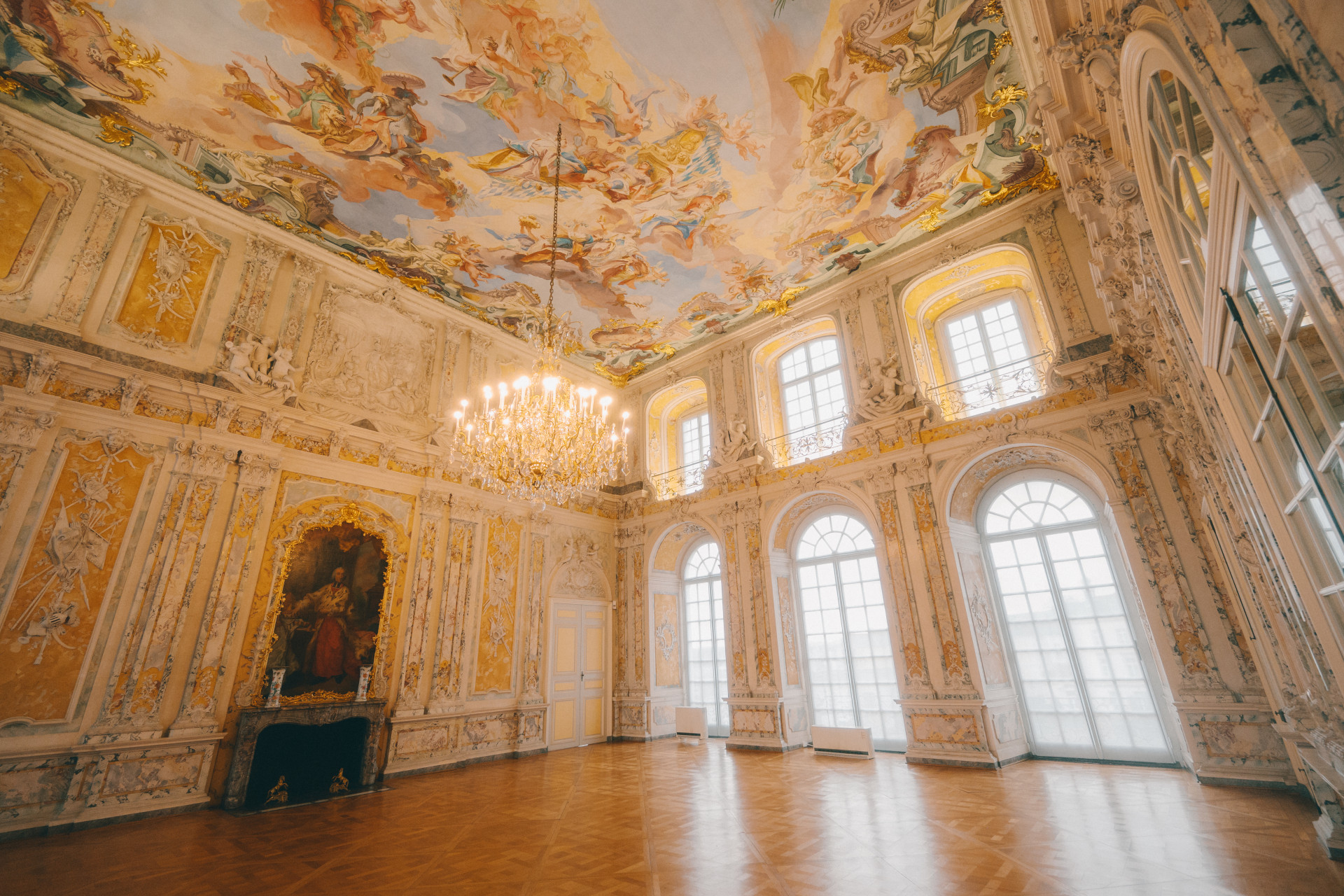
Even today, the magnificent staircase designed by Balthasar Neumann, the sumptuous halls with Carlo Carlone's ceiling frescoes and the sumptuously decorated apartments are still impressive. One of the highlights is the "Yellow Apartment", the elector's private living quarters in early rococo style.
From 1949 to 1996, Augustusburg Palace was used as a representative palace by the Federal President and the Federal Government. Among others, the Federal Presidents received famous state guests such as Queen Elizabeth II, Mikhail Gorbachev, Nelson Mandela and Pope John Paul II here.
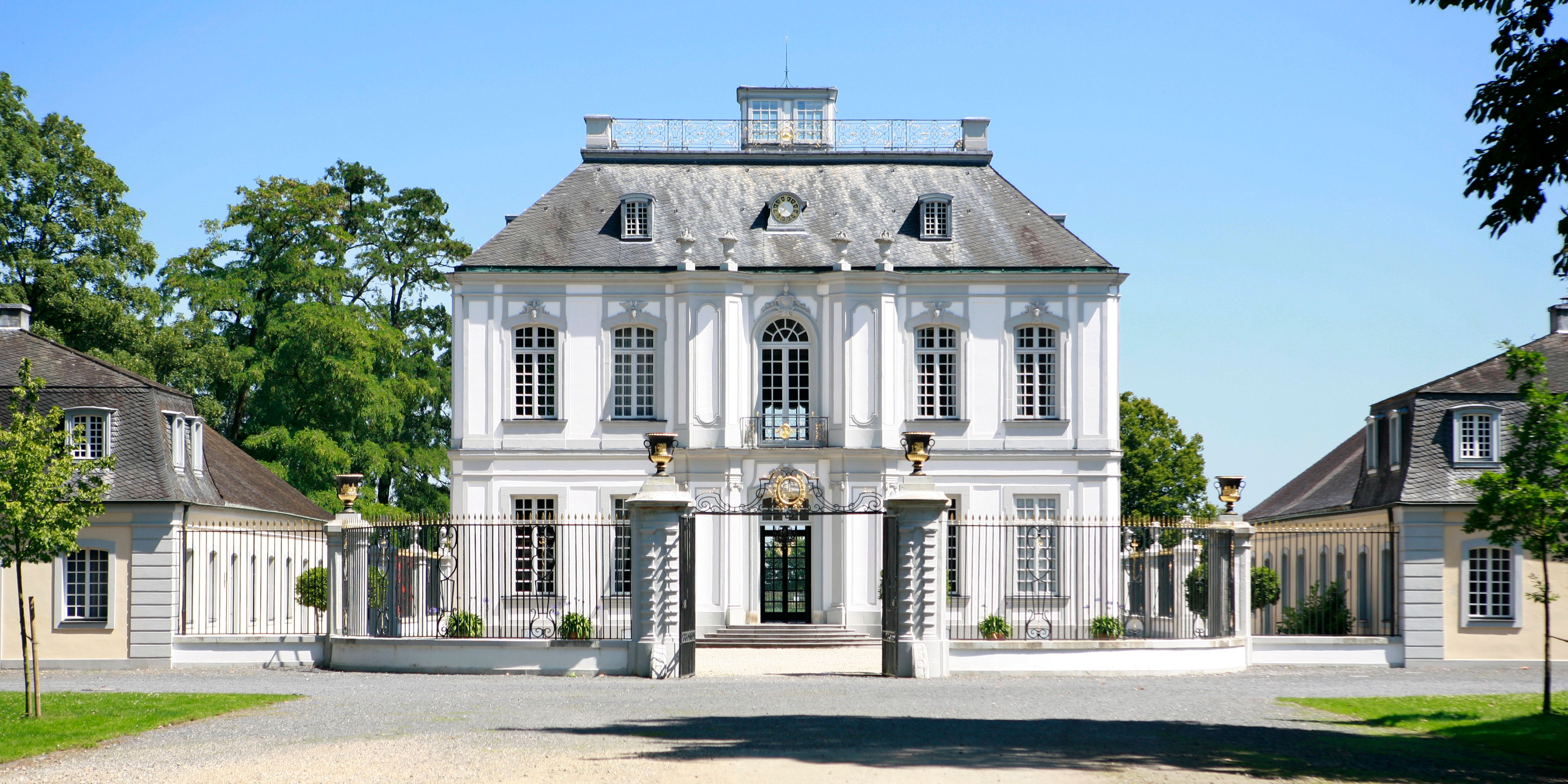
Falkenlust Palace
Between 1729 and 1732, Clemens August had the intimate Falkenlust Palace built - also by François de Cuvilliés the Elder. As a passionate falconer, it served the Elector and his courtly society for falconry and as a private retreat. The staircase, which is fully decorated with Rotterdam tiles, is particularly impressive. The preserved cabinets are also worth seeing - including the "Indian Lacquer Cabinet", whose walls are covered with East Asian lacquer panels and the Mirror Cabinet with its gilded carvings.
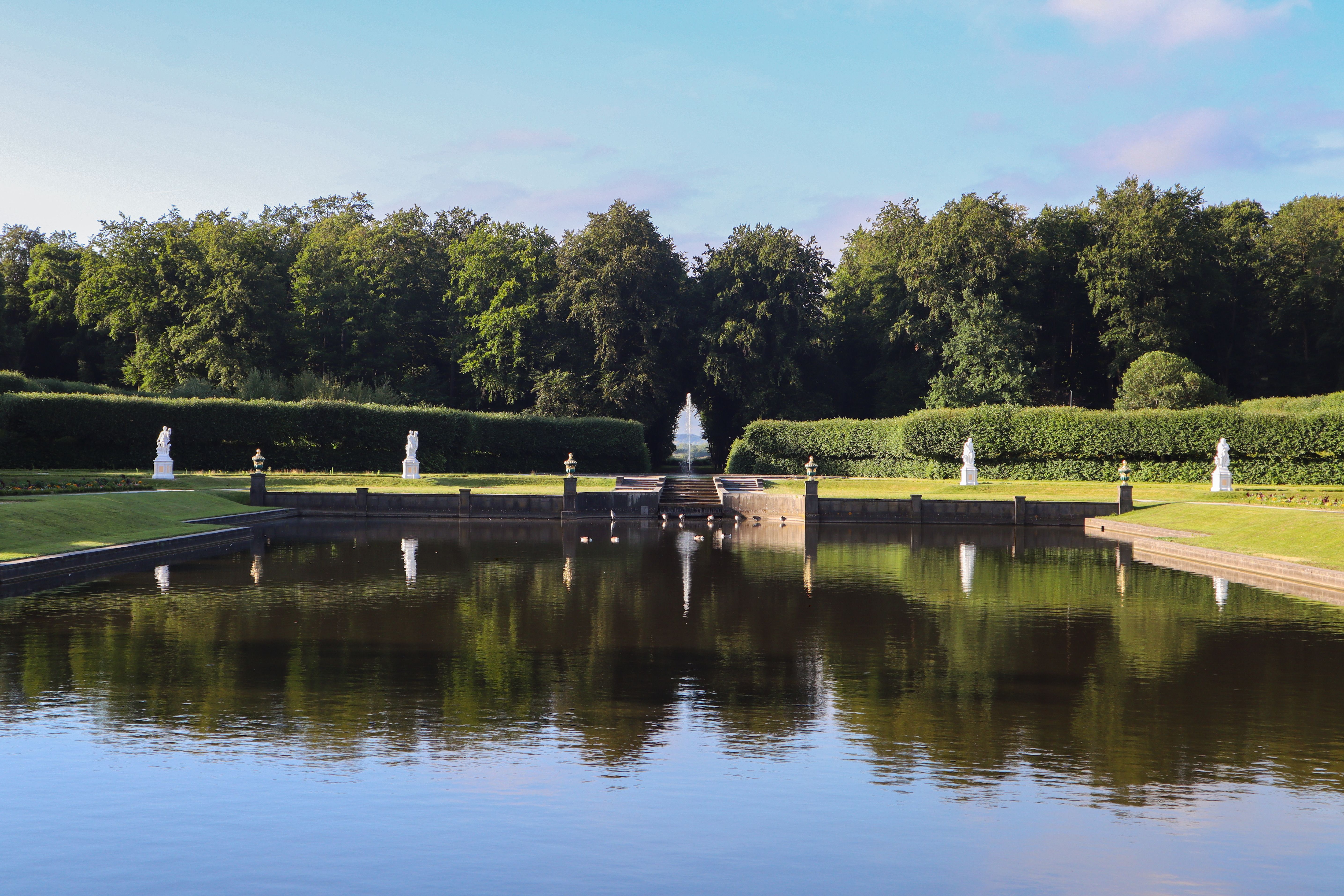
Palace garden
Both palaces are connected by an avenue in the extensive palace park. The centerpiece of the 18th century garden monument is the Broderie Parterre, which was reconstructed in the 1930s according to original plans by French garden artist Dominique Girard. He had completed his training in Versailles and also designed the gardens of Nymphenburg and the Upper Belvedere in Vienna before coming to Brühl. From 1842, Peter Joseph Lenné designed the former zoo as an English landscape garden, elements of which still dominate the woodland area today.